There’s Nothing Like a Good Book to Keep …
A Pig Warm in Winter
Years ago, as a young publisher, I had the privilege of creating and managing a long list of illustrated reference books by Australian writers. Expensive to produce, these books, without the aid of funding grants or generous benefactors, struggled to see the light of day.
Before the internet, we relied heavily on these printed works for reference to a wide range of topics: works that documented flora and fauna, animal and marine life, native birds – all sorts of birds – along with guides to boating, fishing and a myriad number of subjects that might pique our interest. We didn’t have mobile apps to identify our favourite flowers, plants and trees, and we certainly didn’t carry these mighty tomes with us on field trips to discover an elusive bird when walking, or to identify marine life camouflaged amid the rock pools at our local beaches. We were thankful for these authors for being willing to share their painstaking work, their expertise and their labours of love, recording every word and capturing thousands of images to be reproduced on the page.
The economics of publishing these works meant that only a few would ever see the light of day. Printing colour, even today, is expensive. These days I try hard not to print anything, not just because of the expense but because of the trees we save and the damage it causes, from the cartridges filled with harmful chemicals that pollute our waterways and our soil.
My job as publisher was to make these books affordable. I needed to sell for somewhere between $50 and $70 dollars. And to achieve this price, I needed to print at least 10,000 copies. I’d be lucky if the market would buy a fraction of that.
Perhaps, I told my boss, if I could convince book buyers in English-speaking markets overseas that not only were these books informative but a visual delight, I might be able to get the print run up to the magical number of 10,000. These writers were worthy of playing on a world stage. He laughed and peered at me through his thick coke-bottle glasses, ‘Talk to me when you have a check in your hand,’ he said, in his thick Welsh accent.
As luck would have it, overseas markets were interested. And I found an entrepreneurial kindred spirit in London. A book buyer who sold what we in the trade called promotional books, coffee table books and books with lots of pictures. She thought that these books could easily grace the loungerooms of her readers and began to put in large orders. She was a tough negotiator, legendary in the trade. My authors, of course, were delighted with the significant increase in sales and the subsequent modest royalties.
Upon receipt of my first order, feeling very pleased with myself, I waltzed into my boss’s office and plonked the check on his desk. ‘Ha,’ he chortled, ‘let me know if you receive a second one!’ I sighed and carried on, determined not to let this old curmudgeon get to me.
Years later, when I caught up with my kindred spirit in London, she sat me down for a coffee and confessed there was something she needed to tell me. Indeed, she too had only been able to sell a fraction of the print run.
‘But you ordered such large quantities,’ I said.
‘Yes,’ she replied. ‘But what I didn’t sell I sold on.’
‘To whom?’ I inquired.
‘Well,’ she said, ‘I met a farmer from Yorkshire at the local book fair who was complaining about the price of burning coal. He was struggling with the cost of keeping his pigs warm at night. It was sending him broke. In desperate need to make ends meet, he had begun burning his books. He found they burned for longer and were cheaper than coal. So he was looking for a supplier. I began to sell him a large portion of the print run upfront at a price that was a fraction more than the unit cost of printing, allowing me to make my margin on the books I sold.’
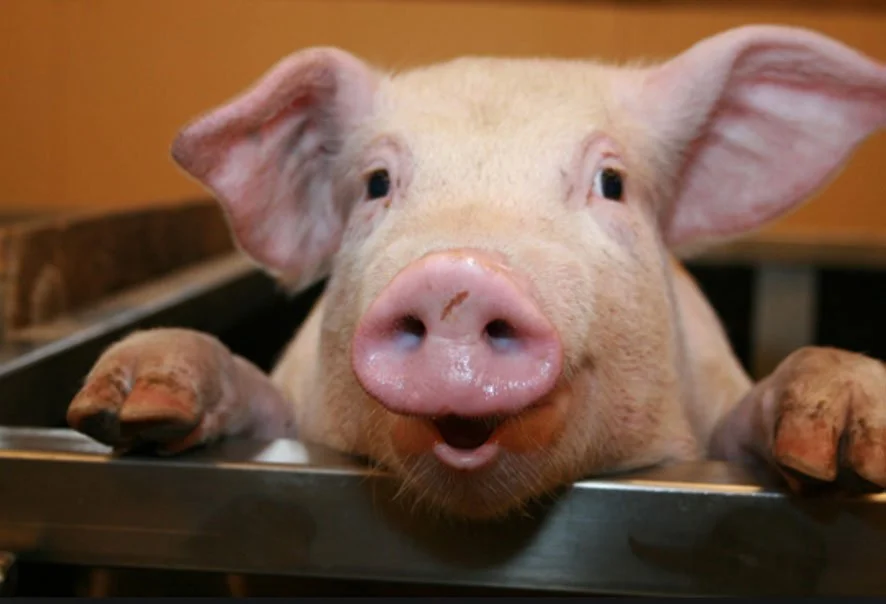
Shocked, I had visions of these pigs reading what hadn’t yet burned. Maybe Orwell is right, and pigs are very clever. I looked at my kindred spirit. ‘Did they have a favourite?’ I asked?
We then both burst out laughing, thankful that at least these beautiful books had been able to see the light of day.