Writing Historical Fiction and The Prize
In 1943, William Dobell won the Archibald Prize for the best portrait of friend and fellow artist, Joshua Smith. Smith’s portrait of Dame Mary Gilmore was the runner-up to the prize. Artists Mary Edwards and Joseph Wolinski had also entered portraits in the competition. After Dobell won, Edwards and Wolinski took him and the Trustees of the Art Gallery of NSW to court, claiming that the painting of Joshua Smith was a caricature rather than a portrait. The subsequent court case profoundly affected both men for the rest of their lives.
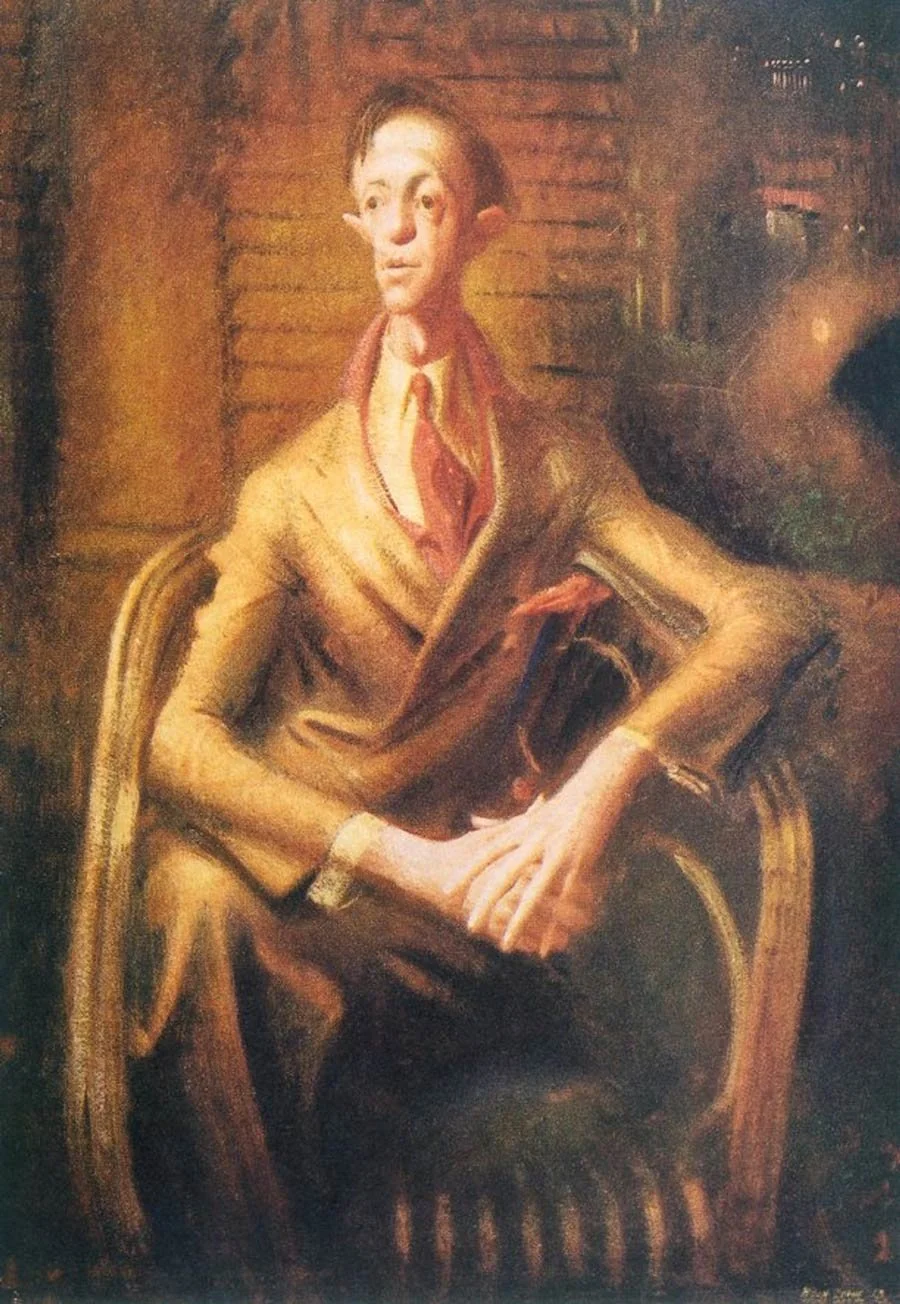
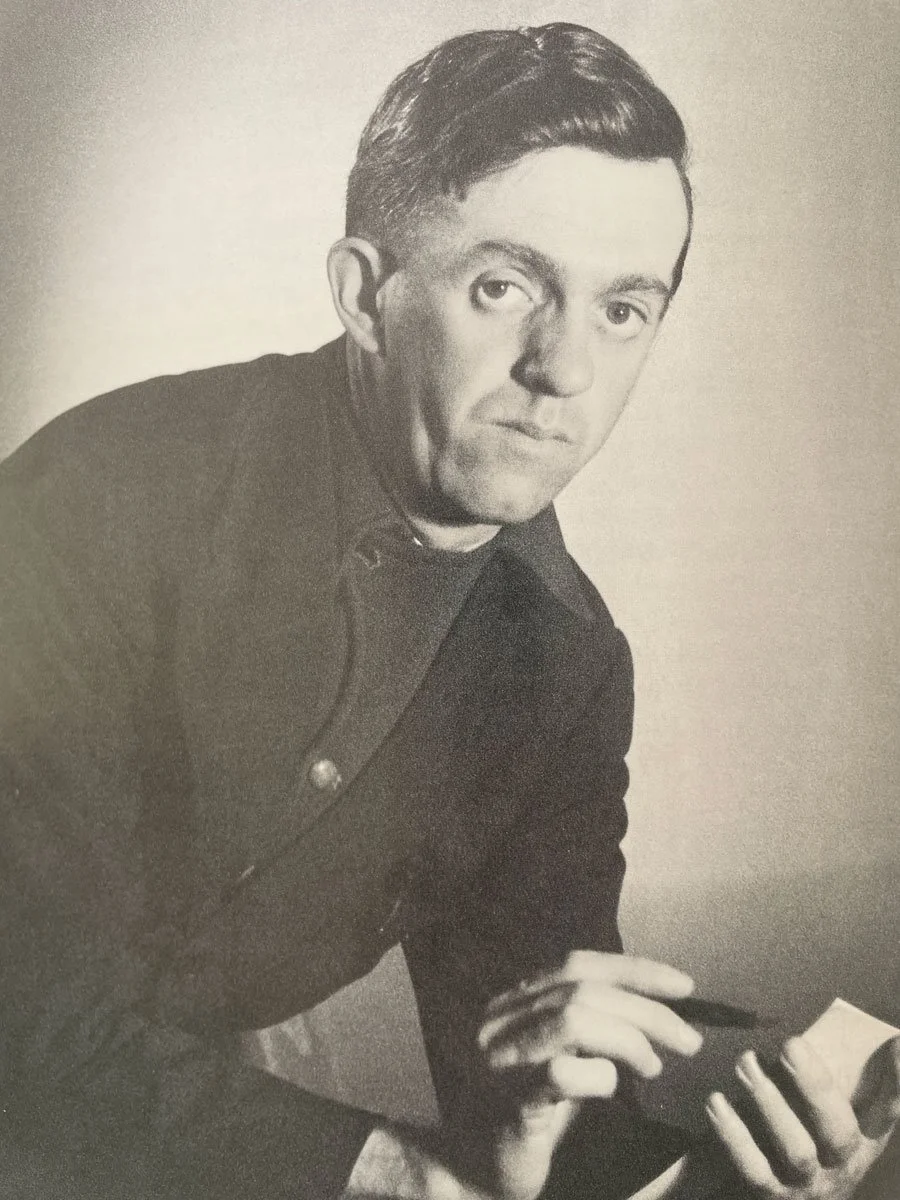
A question I have been asked many times is why write this book as fiction, or historical fiction, rather than as a biography or a work of non-fiction?
Historical fiction is a literary genre usually set at least 50 years before present day.
Both historians and writers of historical fiction have access to research materials such as diaries, letters, official documents, including court records, and other primary as well as secondary sources. Unlike fiction writers, biographers and historians are not permitted to presume or assert what their subjects thought or felt without evidence to the fact. They must avoid filling in the blanks of the historical record with imagined thoughts or emotions unless they explicitly inform the reader that they are doing so.
A wonderful example of this, or what we call faction, is Brian Matthews’ biography of Louisa Lawson, Henry Lawson’s mother, called Louisa, published by McPhee Gribble in 1987. There were so many gaps and unanswered questions relating to Louisa’s life that when writing his very detailed and well-researched biography, Matthews created an alter ego, Owen Stephens, who authored chapters when there were gaps, acting as a signal to the reader that this was the author speculating on what might have happened. In other words, ‘making stuff up’ or, in his case, ‘filling in the blanks’. In doing so, Matthews tied the narrative of fiction and non-fiction together and made it a more engaging and seamless read.
There are many other roadblocks for biographers and historians. Official records are often sanitised, or devoid of the colour and full of ambiguities that are part of life. They are often written intended to be read as an objective report. Fragility, vulnerability, personal secrets, and rancour rarely find their way into these records. Diaries, on the other hand, are often at the opposite end of the spectrum to official documents – subjective, prejudiced or, as a writer would say, a single or narrow point of view. They can also skip critical detail.
Biographers and historians try to avoid these pitfalls, and many succeed, but some can indulge, though not necessarily deliberately, in unconscious bias, selecting records and facts that inevitably are influenced by their own perspectives and preconceptions. Mark Twain noted, ‘The very ink with which history is written is merely fluid prejudice.’
As I commenced my research, I began to understand the full extent of some of the gaps in the story. There was little to no information about Dobell’s sister Alice, one of the most important people in his life. There were no photos in the Newcastle Herald Photo Library, and nothing from the Newcastle public library. There was a photo of Alice with Dobell, but nothing more.
Why was this? As someone who had helped him through the court case, with whom he lived and who was pivotal to his health and his wellbeing, why nothing?
When Dobell died, his personal effects, his diaries if they existed, letters, photographs and written communication, and we presume many other important documents, were destroyed – burned. Some say at his request, others because they were presumed to have no value. Alice died fifteen months before Dobell. So, as Alice had always lived with him, when he died, not only his personal effects but those of his sister were also destroyed, presumed to have no value.
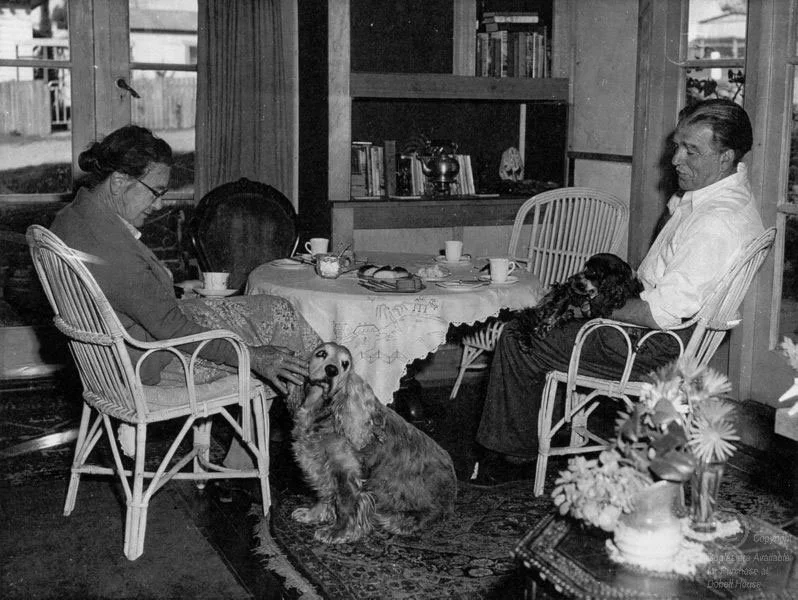
If Joshua Smith wrote a diary, to date, none has been found. It too has likely been destroyed. Quite naturally, neither Dobell nor Smith wanted or looked for the kind of invasion of their privacy they had endured during the court case. They were both very private men.
Let’s consider the time and place in which Dobell and Smith were living. The early 1940s in Australia. For me, this period is one of the most interesting periods in our history. A time of great change to the makeup and fabric of Australian society.
The Australian Labor Party, led by John Curtin, was in power, with a strong commitment to social welfare and economic intervention. He managed the war effort and was planning the postwar reconstruction until he died in July 1945.
1944 was the year the Liberal Party of Australia was founded by Sir Robert Menzies, aiming to offer a centrist alternative to Labor’s policies, promoting individual freedoms, free enterprise and social equality.
Sydney’s cultural life was constrained by wartime rationing, blackouts, and the presence of military personnel. However, the arrival of over 100,000 American troops from 1941 onwards brought significant changes, introducing new music, dance styles, and social customs. American jazz, swing, and Hollywood films became popular, influencing local tastes and nightlife. As was said at the time, the Americans were ‘overpaid, oversexed and over here’.
In 1940s Sydney, homosexuality—particularly male homosexuality—was both illegal and heavily stigmatised. Socially, homosexuality was regarded as immoral, criminal and, by some, as a medical disorder.
Despite these dangers, Sydney developed a small but vibrant underground queer subculture, particularly in inner-city areas like Kings Cross, Potts Point, and Darlinghurst. These neighbourhoods offered some anonymity and relative freedom as gay men and women were forced to live discreet, often secret lives. Public exposure could lead to arrest, prosecution, loss of employment, and social ostracism. Police actively targeted gay men. Both William Dobell and Joshua Smith were gay.
The 1940s were also a time when new approaches to art and a changing attitude toward cultural norms were seizing Europe. Australia was doing its best not to become infected by these radical notions.
In art, Modernism was at the forefront of these changes. Impressionism, Fauvism, expressionism, cubism, Dada, and artists like Picasso, Modigliani, Braque, Mondrian and Kandinsky were challenging notions of traditional and less traditional forms of art. Their influence on Australian art was profound, especially from the 1920s onward. Australian artists and art students travelled to Europe, absorbing new ideas and bringing them back home, including Dobell, who’d won a scholarship to study at the Slade School of Fine Art in London.
Initially, modernism was met with scepticism and even hostility by the Australian art establishment, which favoured traditional landscape and portrait painting. Menzies, who positioned his party as the voice of the average citizen rather than the elite or organised labour, held the view that ‘Great art speaks a language which every intelligent person can understand. The people who call themselves Modernists today speak a different language.’ Dobell himself was accused of being a modernist, which he rightly and vehemently denied.
Amid this backdrop, the Archibald Prize – worth an enormous £500, the richest prize in the country, and one of the richest art prizes in the world – was for many artists the promise of not only future commissions but survival. It was the equivalent to 100 weeks of the then average weekly wage of £5. No surprises why it attracted more than 140 entries in 1943 and a fair amount of controversy and attention, as it still does today.
Jules Francois Archibald was a journalist and co-founder of the Bulletin magazine, who loved controversy
Peter Ross, in his History of the Archibald ‘Let’s Face It’, described Archibald as an ‘energetic iconoclast’ who ‘made a career out of disrespect, shaking a fist at authority and at ‘all who reign over us’. And the writer Joseph Furphy described him as ‘offensively Australian’. There is no doubt he designed the terms of his bequest to be deliberately controversial by being open-ended, if not altogether ambiguous. For example, the subject must have been painted in the twelve months preceding the date fixed by the Trustees for submitting entries, and the portrait had to be painted from real life, with at least one live sitting; and it had to be someone who had contributed to the arts, sciences or letters.
A columnist for the Sydney Morning Herald who wrote under the nom deplume Jaques wrote in 1944: ‘While it is much better that the man in the street should jeer at William Dobell’s portraits than ignore them, a public controversy is about the least satisfactory way of arriving at the value of a new work of art.’
More than 140,000 people came to see Dobell’s portrait of Joshua. Suddenly, many Australians felt comfortable expressing their views about art.
But what piqued my interest in this story was not only the portrait itself but the relationship between the artist and sitter. How well did they know each other? And what did the painter Mary Edwards have to gain by her objections to Dobell winning the prize? She was not the runner-up. Joshua was. Equally, I found it hard to believe that two people who had shared a tent in the Allied Australian Army Corps, and who had spent weekends together fishing on Lake Wangi, would claim during the court case not to be well acquainted.
In 1990, Joshua Smith gave an interview to Janet Hawley, a respected journalist and very knowledgeable on art in the magazine section for the Sydney Morning Herald. It had taken her many years to secure an interview with Joshua. It was now 47 years after the court case, and the first and only time Joshua would talk publicly about the portrait or the case. When you read the article and see the sadness on his face, you understand the serious impact the court case had on his life.
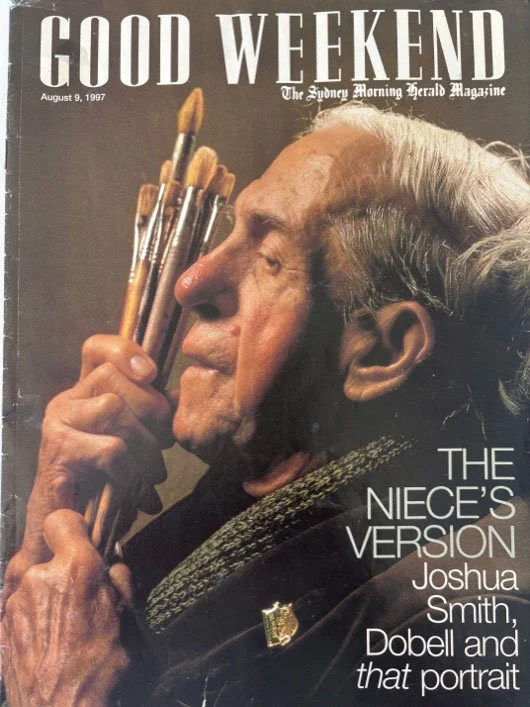
In his words, he states, ‘It’s a curse, a phantom that haunts me. It has torn at me every day.’
I began to read everything published and unpublished on Dobell, the court case, and Joshua. There were plenty of secondary sources. But primary sources were scant, and none answered my questions. I had a couple of recordings of Dobell from the ABC radio archives, recorded after the court case, and I had secured a copy of the full court transcript. I also had Joshua’s papers from the Art Gallery of NSW, the Trustees’ minutes, which are released twelve months after the judging of the Archibald, and a sprinkling of other documents.
Like me, I am sure that at some point in your life you will have entertained the idea of writing a book - a novel - a memoir – a family history. And some of you may have been courageous enough to put pen to paper. Most who do this will secrete the fruits of their labour in the top drawer of a desk or in the drawer of a bedside table. Rest easy. I’ve been assured by AI that you are not alone.
The ‘novel in the drawer’ is a rite of passage for many writers, with the understanding that most first novels never see publication but serve as invaluable learning experiences. One writer referred to them like a fine wine. ‘She left it in the top drawer for so long, it developed a vintage bouquet of dust and regret."
While I had written non-fiction before, I had never tackled anything remotely like a biography or novel. In about 2001-02 – almost 25 years ago – I decided I would try my hand at writing a screenplay, and as this story was very visual, it appealed to me. The head scriptwriter at Channel Nine, Robyn Sinclair, both a colleague and a friend, suggested I give it a go. Robyn was a seasoned scriptwriter and editor, a writer on the TV series McLeod’s Daughters, and she had cut her teeth on Blue Heelers and A Country Practice.
Fortunately for me, Robyn was a most generous friend and took the time to read my first draft. She sat me down over a coffee and, ever so gently and with great tact, reassured me I could write. BUT she said, ‘remember the old adage 'show don't tell’.
I immediately stashed the screenplay in my top drawer, where it lay lurking for many years. Occasionally, I would pull it out and have a look at it, but back it would go.
Sadly, Robyn passed away before this book was published.
Eventually, in 2016, I went to my top drawer, pulled it out and began writing again. The responsibility of a biographer and a historian haunted me. Tempted to put my work back in that top drawer, I resisted and, eventually, I wrote the first draft and showed it to my agent, who astutely noted there were plenty of biographies of Dobell, suggesting I ‘Write it as a novel - as fiction.’
I’m sure you can understand how loudly I groaned. The top drawer looked very inviting. Instead, I took a leap of faith and embarked on the journey of writing this historical novel.
While having the freedom to write this as fiction, to fill in those gaps in the story, the sense of responsibility doesn't leave you. In many ways, it becomes even more important. These are real people, real lives and actual events. I would have to write how they felt. What they were thinking. But I also wanted to stay close to the facts.
It also seemed that it was too well-known a case not to use real names. So, I was very conscious of ensuring that readers understood that this was fiction but based on extensive research.
A few other problems presented themselves. I would have to create Alice’s character. What was she like? She must have known about their relationship, and I wanted her to be like my own sisters – supportive, caring, non-judgemental – and with a garden that was entirely different to that of Louisa’s as a way of highlighting their differences. Secretly, I wanted her to be the most loved character in the book. And I wanted her to care as much about Joshua as she did Bill.
Louisa, Joshua’s mother, was by all accounts domineering. She managed the family budget and household, and was very protective of Joshua. Someone suggested that I had caricatured her. It’s an easy thing to do, and I did worry that I may have been unkind. But, in fact, Joshua painted more than 35 portraits of her, claiming she was an amiable sitter.
It is fair to say that if Mary Edwards had lived in the 21st century, I doubt she would have been so notorious. She often behaved in a manner that was considered ‘mad’. And yes, she did wear her hair in plaits coiled around her ears, a hat on the final day of the court case with a bow that resembled a giant moth and was well known for her sartorial splendour.
The Cross, too, is a character in the story. It was very cosmopolitan, and some shops stayed open until 1 am in the morning. Flower sellers, milliners, and fashion shops were very popular with women from the Eastern suburbs, who came for the latest fashions, and to sip coffee in the cafes and delis run by Polish and other Jewish refugees.
For those of you who are familiar with Sydney, the St James building, where Alice stays when she is in Sydney, is on the corner of Stanley and Yurong Streets in Darlinghurst. The St James was Sydney’s first high-rise and is a beautiful example of the Art Deco style. It was used to provide rooms, dinner and dancing for country visitors, and today the foyer still has the original advertisements for rooms and the dancing schedule.
One of the joys for me in writing is the research and the process of discovery. That is what makes writing historical fiction so enjoyable.